
Liposuction

Lipedema Surgery: Liposuction for Lipedema
The symptoms caused by lipedema can be treated with both conservative and surgical therapies. Conservative therapy, however, can only relieve the symptoms; it does not remove the diseased fat tissue. Alongside general measures such as weight management through a healthy diet and regular physical activity (exercise and sports), it includes compression therapy, manual lymphatic drainage, and other decongestive therapies.
The most effective way to stop fat deposits from growing, reduce the fat, and relieve patients of the accompanying symptoms of this condition (pressure pain, bruising, fatigue, etc.) is to treat the areas affected by lipedema with lymph-sparing liposuction. Surgical treatment therefore provides long-lasting relief from the typical symptoms of lipedema. At the Lipödem Zentrum München (Lipedema Center Munich), you have experienced doctors at your side for every aspect of the condition. We are an interdisciplinary team in Munich, Germany, specializing in the treatment of lipedema (also spelled lipoedema).
When Is Liposuction
Advisable for Lipedema?
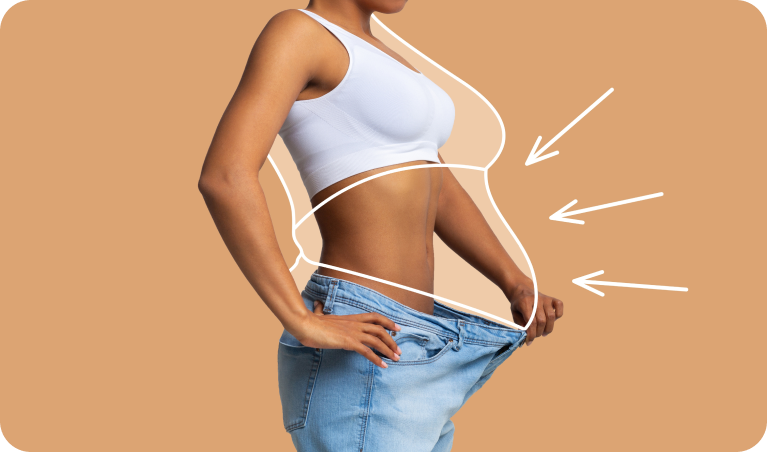
To determine whether liposuction is an option in your case, we take time for a detailed consultation. Only when we understand a patient’s needs and wishes can we assess which treatment is right. At the same time, there are standardized indications for lipedema surgery, which we are happy to explain here.
Liposuction may be an option if …
the excess fat tissue is to be removed
swelling and pain occur despite conservative measures (manual lymphatic drainage, decongestive therapy)
you suffer from wearing compression garments, for example in the summer heat
your BMI is below 35 or can be lowered to that level through obesity treatment
you experience significant psychological strain because of your condition
Please note that liposuction is not a weight-loss measure. It is therefore important to reduce any excess weight before surgery.
The Four Types of Lipedema
In addition to the classification of lipedema into stages, lipedema is also divided into different types. The type classification takes into account which limbs are affected by the fat accumulation.
Type I
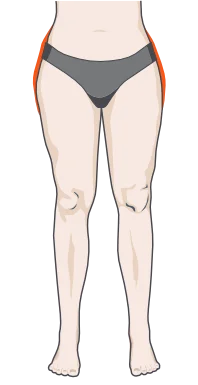
Type I is characterized by abnormal increases in fat tissue, mainly on the hips and buttocks.
Type II
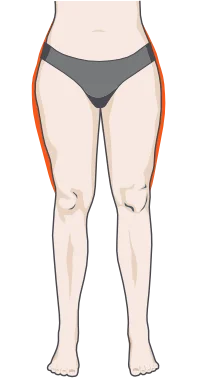
In type II, lipedema extends not only across the hips and buttocks but also to the thighs.
Type III
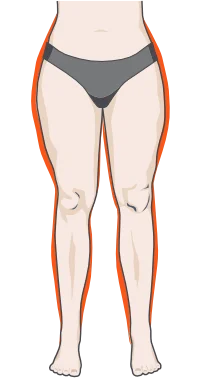
Here, the entire leg down to the ankles is affected by the increase in fat tissue.
Type IV
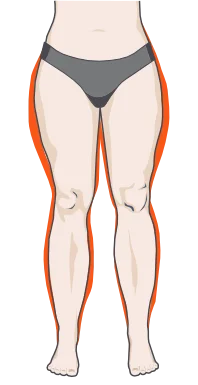
In type IV, the fat accumulations extend across the entire leg and the arms.
How Liposuction Works
Careful planning is above all what makes lipedema surgery safe and successful. We take our time for both the consultation and the planning of surgical treatment. We are by your side through every phase of your lipedema treatment and are always there for your questions and concerns.
| Lipedema Surgery | |
|---|---|
| Duration of surgery | 1–3 hours |
| Hospital stay | recommended for 1–2 days after larger-volume liposuction |
| Anesthesia | usually general anesthesia |
| Time off work | 1–2 weeks |
| Physical rest | around 4 weeks |
| Number of procedures | usually 2–4 |
| Final result | visible after 3 months |
| Long-term results | Fat cells that have been removed do not come back. To prevent fat tissue from building up elsewhere, exercise and a healthy diet are important. |

1st Appointment
Examination and Diagnosis
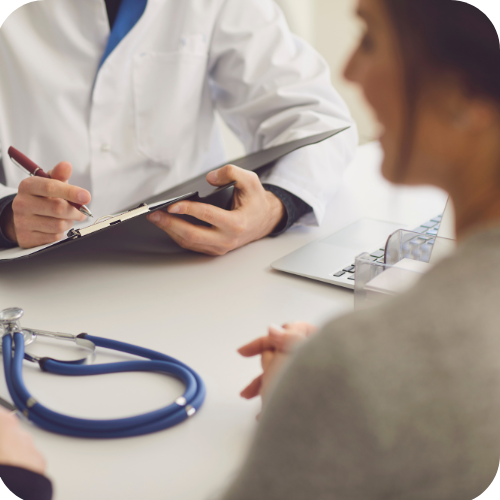
Your first appointment at the Lipedema Center Munich focuses mainly on your medical history and the diagnosis. Your symptoms, previous treatments, and general state of health are important here. We also analyze general factors that play an important role in the development of lipedema, such as eating habits, physical activity, and hormonal changes.
What Exactly Will Be Examined?
2nd Appointment
Information About Surgery & Anesthesia
At your second appointment, you will receive detailed information about your surgery. We also explain the surgical risks, the aftercare, and what to do and avoid after the treatment in detail. In your consultation with the anesthesiologist, you will learn all the details about the anesthesia, and your test results (lab values, ECG, etc.) will be discussed.


3rd Appointment
The Day of Your Lipedema Surgery
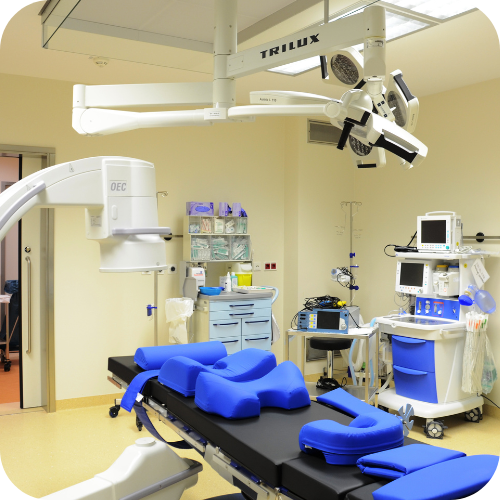
On the day of surgery, you come to the Lipedema Center and are shown to your room. After a final consultation with the surgeon, the areas of the body to be treated are marked. Anesthesia is then induced. The anesthesia team is present throughout the entire operation and monitors your vital functions.
How Is the Liposuction Performed?
4th Appointment
Postoperative Check-Up 1
After 3–4 days, you return to the Lipedema Center Munich for your first postoperative check-up. Our doctors perform a general examination and check your wounds. We also check your blood values. This examination is usually brief, and you can go home again afterward. If severe swelling or bleeding occurs in the meantime, please contact our practice immediately.



5th Appointment
Postoperative Check-Up 2
If any incisions had to be closed with sutures, these are removed at the second check-up 10–14 days after your lipedema treatment. Any follow-up treatments are also discussed at this appointment.
6th Appointment
Check-Up After About 3 Months
About 3 months after your surgery, we see you for a final check-up. Your experience after surgery is important to us. Have pain and limitations been effectively relieved? In most cases, patients need no or significantly fewer conservative treatments after liposuction. During this consultation, we can also plan any further treatment steps.
Good to know: The skin does not always tighten on its own after liposuction. We can treat sagging skin with a skin-tightening procedure.

After Your Lipedema Treatment
After your lipedema treatment, you should take it easy physically for around 4 weeks. Short walks are usually possible one week after surgery and boost your metabolism. Bruising and swelling are common side effects of liposuction. Temporary changes in skin sensation may also occur. Special compression garments support the body during wound healing and minimize swelling.
In the long term, a healthy diet and regular exercise are important. The body does not regenerate fat cells once they have been removed, but the remaining fat cells can continue to expand. In such cases, further conservative or surgical treatment is necessary to relieve the symptoms.
The Best Time for Lipedema Treatment
Lipedema Surgery Has Been Shown to Improve Quality of Life
The vast majority of patients are very satisfied with the results of their surgery — something we see time and again in our Munich practice. Our experience is confirmed by a study from Lübeck in which 255 patients took part.
This has now also been confirmed by a large randomized trial: in the LIPLEG study (410 women, stages I–III, eleven centers), 68% of the women who underwent surgery had noticeably less pain after twelve months, compared with 8% under conservative therapy alone. Mobility and physical quality of life also improved significantly. However, not all patients achieve the relief they had hoped for.
As a general rule, patients benefit from surgery at every stage of lipedema. Even in the early stages of lipedema, liposuction can make a decisive contribution to improving quality of life. How long flat-knit compression stockings are still needed after the procedure, and how often manual lymphatic drainage is necessary, varies from case to case:
A Lipedema Patient’s Story Including After Photos
We know that many patients have been through a long and difficult journey. That is why it is important to us to take you seriously and listen to you.
In the video, you can see how one patient
experienced her treatment and what she
looks like after lipedema surgery.
How Much Does Lipedema Surgery Cost in Germany?
The costs of your lipedema surgery depend on your individual circumstances. How much fat needs to be removed? Which procedure will be used? What type of anesthesia do you prefer? We’ll discuss all these factors to create a personalized cost plan for you. Since the resolution of the Federal Joint Committee (G-BA) of July 17, 2025, liposuction has been covered by German statutory health insurance at all stages under certain conditions. The Lipödem Zentrum München is a private practice and does not bill statutory health insurance. Treatment is billed privately in accordance with the German medical fee schedule (GOÄ). This applies to patients with private health insurance as well as to self-paying patients, including patients from abroad.
Liposuction for Lipedema: Available Surgical Techniques
The standard method is the so-called tumescent technique. We first inject a tumescent solution into the tissue that also contains a local anesthetic. The solution causes the blood vessels to constrict, which reduces bleeding. We then make small incisions to remove the fat in a targeted way.
There are several variants of lipedema liposuction as well as some newer methods that we regularly use at the Lipedema Center Munich.
For example:
Water-jet-assisted liposuction (WAL): A water jet helps flush the fat cells out of the surrounding tissue. This allows the procedure to be performed more gently.
Radiofrequency-assisted liposuction (RFAL): Using the innovative BodyTite™ technique, we remove fat deposits with a controlled increase in temperature. The heat also stimulates collagen production, which has a tightening effect.
Laser-assisted liposuction (LAL): Gentle increases in temperature destroy unwanted fat cells and tighten the tissue.
Power-assisted (vibration) liposuction (PAL): Vibrations make it easier to loosen fat cells from the tissue, so that even large fat deposits can be removed gently.
At the Lipedema Center Munich, we mainly combine the vibration method with RFAL: PAL removes most of the fat tissue, while RFAL primarily tightens the tissue and skin.
If some excess skin remains after larger volumes of fat have been successfully removed, we can offer you minimally invasive methods or various skin-tightening procedures, depending on the extent.
Statistics on Repeat Treatments
Alternative Treatments
FAQs About Lipedema Surgery
When Is Liposuction Advisable for Lipedema?
How Does Liposuction for Lipedema Work?
Is Liposuction Painful?
How Much Fat Can Be Removed During Lipedema Surgery?
How Long Does Recovery Take After Liposuction?
Can Lipedema Come Back After Liposuction?
What Are the Risks?
What Should I Keep in Mind After Lipedema Surgery?
Will There Be Scars?
The All-Round Package from Your Lipedema Specialist
Prof. Dr. Kovacs has many years of experience in the surgical treatment of lipedema patients. He performs liposuction gently and carefully, enabling a significant reduction in pain and greater freedom of movement. Choose holistic treatment at our private practice in Munich.

Personalized
Care
Holistic
Treatment
Experienced Specialists
State-of-the-Art
Technology
Comprehensive Aftercare
Patient Satisfaction